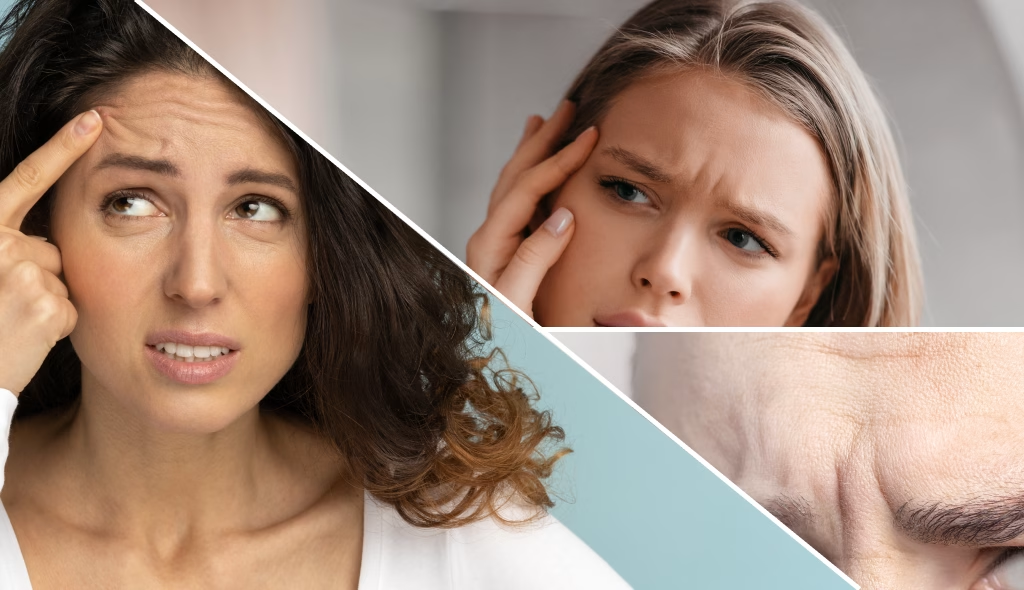
If you are considering Botox for the first time, you are probably dealing with a mix of excitement and nervousness, which is completely normal. On one hand, you’re looking forward to smoother skin and softer lines. On the other hand, you probably have a lot of questions before booking the first appointment, and that’s fine.
Botox treatments have ranked as the number one minimally invasive procedure for over a decade. But popularity alone should not be your reason for choosing it. Knowing what to expect from the treatment to recovery, and results helps you make a well-informed decision and avoid unnecessary surprises.
In this blog, we’ll walk you through everything you need to know about getting Botox for the first time, step by step, so you know exactly what the experience looks like before you even step into the clinic.
What Is Botox?
Botox is the brand name for a purified form of botulinum toxin type A, a neuromodulator that temporarily relaxes targeted muscles by blocking the nerve signals that cause them to contract. When injected in precise, medically controlled amounts, it softens the lines and wrinkles that form from repeated facial expressions. The result is a face looking refreshed and natural, not frozen or overdone.
The active ingredient (Onabotulinumtoxin A) was first approved by the FDA for cosmetic use in 2002, for frown lines. Since then, its approved uses have expanded to forehead lines, crow’s feet, and several medical treatments such as chronic migraine, hyperhidrosis, and jaw clenching. Today, Botox is widely used both in cosmetic treatments for smoother, youthful-looking skin and in medical settings to address a variety of health conditions.
Who Is a Good Candidate for Botox?
If you are a healthy adult bothered by fine lines that appear when you frown, squint, or raise your brows, you are a good candidate for Botox. The treatment works well across a wide age range, from people in their late 20s using it preventively before lines have a chance to deepen, to those in their 40s, 50s, and beyond who are looking to soften wrinkles that have already set in.
However, it is not suitable for everyone. You should not receive Botox if you are pregnant or breastfeeding, as there are insufficient safety data for these groups according to Allergan.
Also see who is not a good candidate for Botox:
How to Prepare for Your First Botox Appointment
In the week leading up to your appointment, avoid blood-thinning medications and supplements where medically appropriate. This includes aspirin, ibuprofen, fish oil, and vitamin E, all of which can increase the likelihood of bruising at the injection sites. If you are on any prescription blood thinner, do not stop them without consulting your prescribing physician first. Alcohol also thins the blood and dilates vessels, so skip it for at least 24-48 hours before your session. At the same time, focus on staying well hydrated, as good skin hydration supports a smoother recovery.
Before your appointment, take some time to consult your dermatologist about your medical history, any allergies, and all medications you are currently taking, both prescription and over-the-counter. The doctor will then confirm that Botox is safe and design a treatment plan that actually works for you.
It is also worth thinking about timing when you book. Don’t schedule your first session right before an important event, wedding, or job interview, since mild swelling or bruising can occasionally take a couple of days to fully settle. Giving yourself at least two weeks before any big occasion is the best approach.
On the day of your appointment, it is recommended to arrive with a clean face. Skip heavy makeup, especially around the areas you plan to have treated, as the skin needs to be clean and visible for accurate injection placement. You do not need to fast or make any dietary changes. Wear comfortable, loose-fitting clothing because you will be reclining in a treatment chair for some time.
What to Expect During Your First Botox Appointment
A typical Botox session, from the moment you sit down to the moment you walk out, takes around 20 to 30 minutes only. Before any injection takes place, your dermatologist will conduct a clinical assessment of your face at rest and during movement. They will ask you to frown, raise your brows, squint, and smile, so they can observe exactly which muscles are most active and determine where the toxin needs to be placed to achieve the outcome you have discussed.
After that, the treatment is done using a very fine needle. Most patients describe the sensation as a small, brief pinch, though the needle used for Botox is considerably thinner. A numbing cream is also applied if you are sensitive, even though most patients find they do not need it. Once the treatment is done, you are free to leave immediately and return to your normal day.
What to Expect After Your First Botox Appointment
You may notice minor swelling, slight redness, or pinpoint bruising around the injection sites after Botox treatment. They typically resolve within a few hours to a couple of days. Also, Botox does not work immediately. The neurotoxin needs time to bind to the targeted nerve endings and begin blocking the signals that cause muscle contraction. Most patients begin to notice a softening of movement in the treatment areas within 3 to 5 days. The full result, where the muscle is fully relaxed and smooths out, develops over 10 to 14 days.
A 2-week follow-up appointment is standard practice at reputable clinics. This is the point at which your dermatologist can assess the outcomes, identify any areas of asymmetry, and determine whether a small top-up is needed. For first-time patients, this follow-up is valuable because it gives your provider a clear understanding of how your muscles respond to the product.
How Much Botox Is Normal for the First Time?
For the first time, 20 to 30 units of Botox is generally considered appropriate, which is enough for treating common concerns such as forehead lines, frown lines, and crow’s feet. However, the right dose depends on the areas being treated, your muscle strength, facial anatomy, and what outcome you are looking for.
If you are using Botox for the first time, always start conservatively because it gives your dermatologist the chance to see how your muscles respond to the product before committing to a higher dose. You can always add more at your follow-up if you feel the outcome is too subtle, but you cannot undo too much.
How Long Do Botox Results Last?
For most patients, Botox results last somewhere between 3 and 4 months. After that, the neurotoxin gradually breaks down, allowing the treated muscles to slowly regain their ability to contract, and the lines begin to return. However, Botox longevity depends on multiple factors, including your metabolism, activity level, the area being treated, and how consistently you have been getting Botox over time. According to PubMed, patients who stay consistent with their Botox treatments often find their results lasting slightly longer over time, most likely because the targeted muscles gradually weaken from sustained underuse and need less product to stay relaxed.
Are There Any Risks or Side Effects of Botox?
Botox has a well-established safety profile when administered by a qualified medical professional. Like any medical treatment, it carries the possibility of side effects, and being informed about them is part of making a responsible decision.
The most common side effects are localized and temporary. These include bruising, swelling, or redness at the injection site, and a mild headache in the hours following treatment. These effects typically resolve on their own within a few days and do not require medical intervention.
Serious systemic side effects from Botox are extremely rare when FDA-approved products are used in appropriate doses. The risk profile changes substantially when treatments are performed by unqualified providers or with counterfeit or diluted products. This is why choosing a board-certified dermatologist and a reputable clinic is non-negotiable.